 See the Machine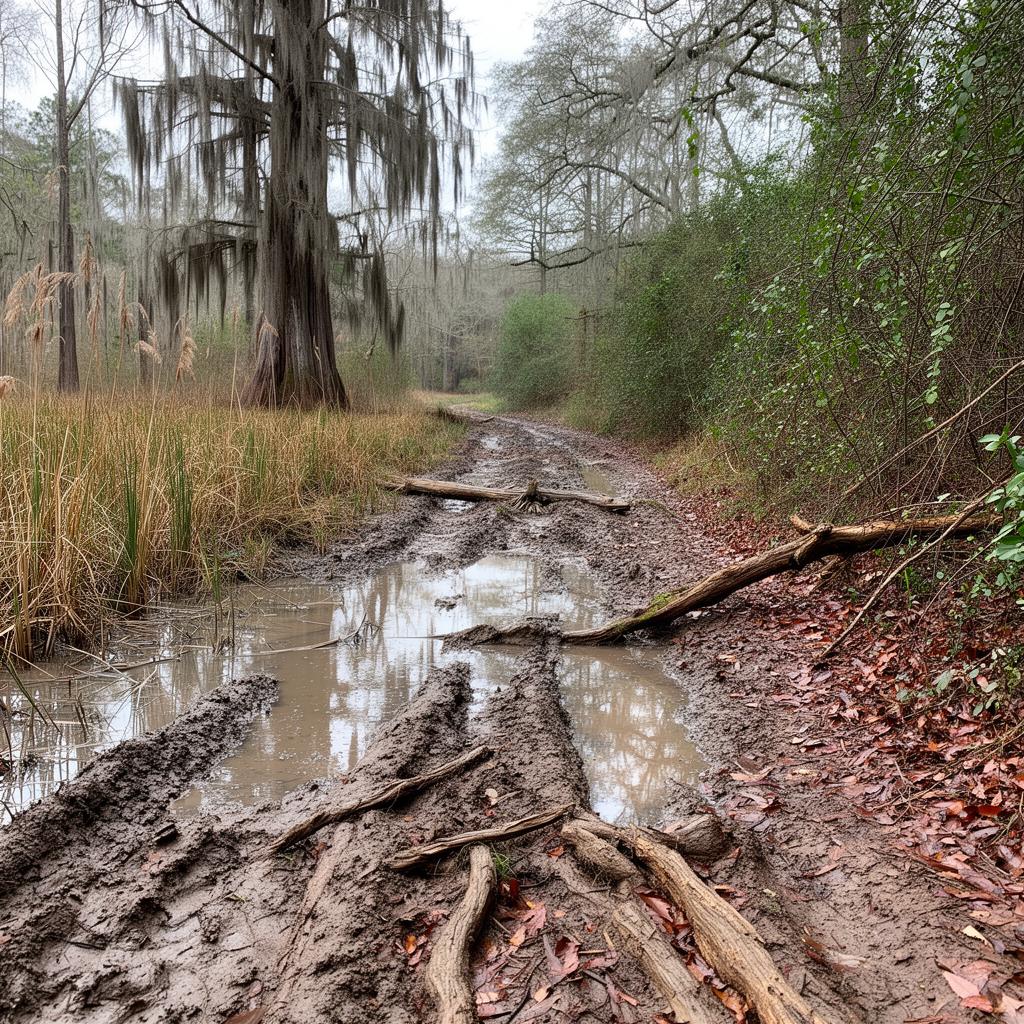
How to Find Accessible Hiking Trails in the Deep South
Down here, when a state park says a trail is "accessible," what they usually mean is the paved loop behind the visitor center. That's it. Half a mile around a duck pond. Nice for ten minutes, but if you grew up fishing the back of a creek bend or watching the sunset off a bluff, it's not what you came for.
The good news is there are real trails — woods trails, water-view trails, boardwalks out into the marsh — that you can actually roll across five Southern states. The bad news is finding them takes more than a Google search for "wheelchair accessible trails near me." Here's the way we tell folks to do it.
1. Start with sources that don't oversell
Three places give you the straightest answers:
- **AllTrails** — filter by "Wheelchair friendly." Read the recent reviews, not the trail description. Reviewers will tell you about a root that wasn't in the photo.
- **National Park Service Accessibility pages** — every NPS unit has one. For us that means Natchez Trace, Gulf Islands National Seashore, Great Smoky Mountains, Hot Springs, and Vicksburg. They list specific trails, surface types, and grades.
- **State park ADA / accessibility pages** — every state we cover has them, and they're more honest than the brochure. AL, MS, LA, TN, AR all publish lists, and most include surface and length.
If a page just says "accessible" with no surface type, no grade, and no width, treat it like a maybe — not a yes.
2. Read the trail page like a skeptic
Four numbers tell you almost everything you need to know:
- **Surface.** Paved is paved. Boardwalk is reliable. "Compacted gravel" varies wildly. "Natural surface" means roots and ruts.
- **Grade.** Anything over 8% is going to be a fight in a standard power chair. Over 12%, you want an all-terrain machine or you don't want it.
- **Width.** Under 36 inches is a problem for most chairs. Under 48 inches is tight for passing.
- **Trailhead.** Paved parking, an accessible spot, and a level path from the lot to the trail — or you're stuck before you start.
If those four aren't on the page, skip to step 3.
3. Call the ranger station
Ninety seconds on the phone saves a wasted Saturday. Rangers know which "accessible" trails actually are, which ones got beat up by the last hurricane, and which ones are fine after a dry week but soup after a wet one. They'll also tell you where the closest accessible restroom is, which is the kind of detail no website prints.
Ask three questions: *Is the surface holding up right now? Is the trailhead parking and restroom usable from a chair? Is there a better trail in the park you'd send me to instead?* That third one is gold.
4. Know what your chair can actually do
A lot of the frustration with "accessible" trails comes from a mismatch between the chair and the ground. Three honest buckets:
- **Standard power chair / scooter.** Pavement, boardwalk, hard-packed gravel on a gentle grade. That's the job.
- **Beach / sand wheelchair.** Balloon tires, usually pushed by a helper, often rented at the beach. Great for sand, not great for anything else.
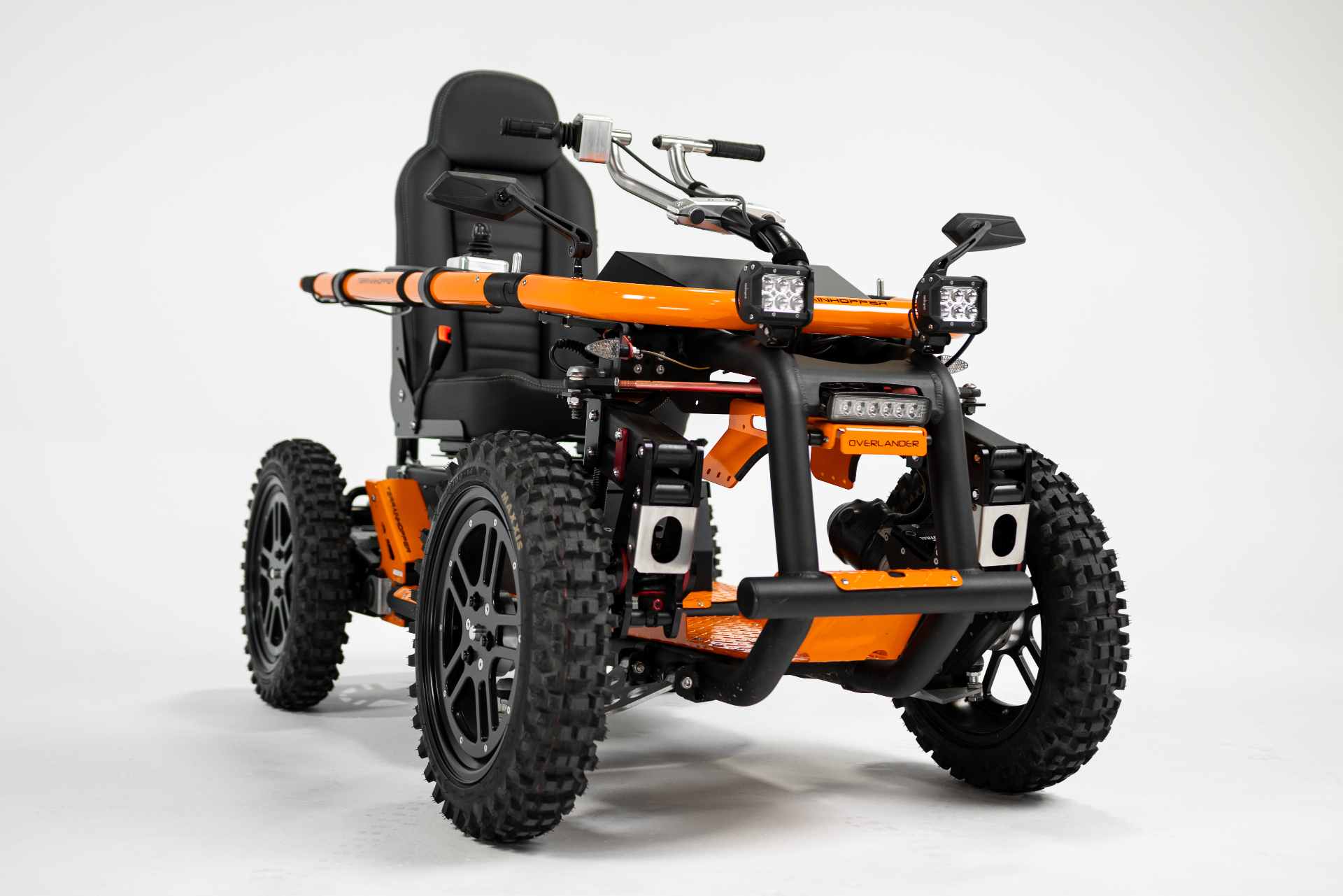
- **All-terrain mobility vehicle.** Four-wheel-drive, real suspension, climbs grades a regular chair can't touch, handles mud and wet grass. That's the machine we sell, and it's a different category from the first two. If you're curious how it stacks up against a tracked chair, we wrote that comparison here.
Match the chair to the trail and most of the "this is impossible" feeling goes away.
5. Build a Deep South shortlist
We keep a state-by-state rundown of where the TerrainHopper goes and where folks have asked us to bring one — see the five-state map. A few launching points by state to get you started:
- **Alabama** — Gulf State Park has paved trails and beach access; Cheaha State Park has accessible overlooks.
- **Mississippi** — LeFleur's Bluff in Jackson has accessible boardwalks; Gulf Islands National Seashore has accessible beach approaches.
- **Louisiana** — Jean Lafitte's Barataria Preserve has miles of accessible boardwalk through swamp; Fontainebleau on the north shore is flat and friendly.
- **Tennessee** — Radnor Lake's Lake Trail (paved), Reelfoot's boardwalks, and several Smokies accessible trails like the Sugarlands Valley Nature Trail.
- **Arkansas** — Hot Springs has accessible promenade trails; Petit Jean has accessible overlooks at Cedar Falls.
None of those are "the back forty." That's where an all-terrain machine changes the conversation.
FAQ
Can a wheelchair go on a hiking trail?
A standard power chair or scooter can handle paved, boardwalk, and well-packed gravel trails on a gentle grade. Roots, ruts, mud, sand, and grades over about 8% are where standard chairs run out of road. An all-terrain mobility vehicle handles all of that.
Can you take a wheelchair on the beach?
Yes, with the right chair. Standard power chairs sink in sand. Beach wheelchairs use balloon tires and are usually pushed by a helper — many Gulf Coast beaches rent them free. An all-terrain machine like ours drives itself across packed sand and beach approaches without help.
What's the difference between ADA-accessible and all-terrain?
ADA-accessible means the surface, grade, and width meet federal standards — typically paved, under 5% grade, at least 36 inches wide. All-terrain means the chair itself is built for ground that doesn't meet those standards: trails, fields, beaches, hunting leases.
Are Southern state parks wheelchair accessible?
Most have at least one accessible trail, an accessible cabin or campsite, and accessible restrooms. The depth varies. Alabama, Mississippi, Louisiana, Tennessee, and Arkansas all publish accessibility info park by park — call the ranger station for the current condition.
How much does an all-terrain wheelchair cost?
Real all-terrain mobility vehicles run from the high four figures to the mid-five figures, depending on motor power, range, and options. That sounds like a lot until you price what folks spend on hunting leases, boats, or RVs to keep doing what they love. We're happy to walk you through pricing on a call.
Can I put all-terrain wheels on my regular wheelchair?
There are bolt-on track and balloon-tire attachments for manual chairs that help on sand or grass for short distances. They don't turn a standard chair into a four-wheel-drive machine. For real off-pavement use — hills, mud, climbing — you want a purpose-built vehicle.
Are there grants to help pay for one?
Yes. VA benefits, state vocational rehab, hunting and outdoor-access nonprofits, and several disability foundations all fund all-terrain mobility. We track the ones that apply down here on our funding page, and if you're a veteran, start here.
Can I try one before I buy?
That's the whole point of a sales consultation. Tell us where you actually want to go — your lease, your beach access, your favorite trail — and we'll talk honestly about whether the TerrainHopper is built for it.
One more thing
If you've found an accessible trail down here that nobody talks about — or got run off one that claimed to be accessible and wasn't — tell us. We're building a working list and we'd rather have your real experience than another brochure. Drop us a line.