
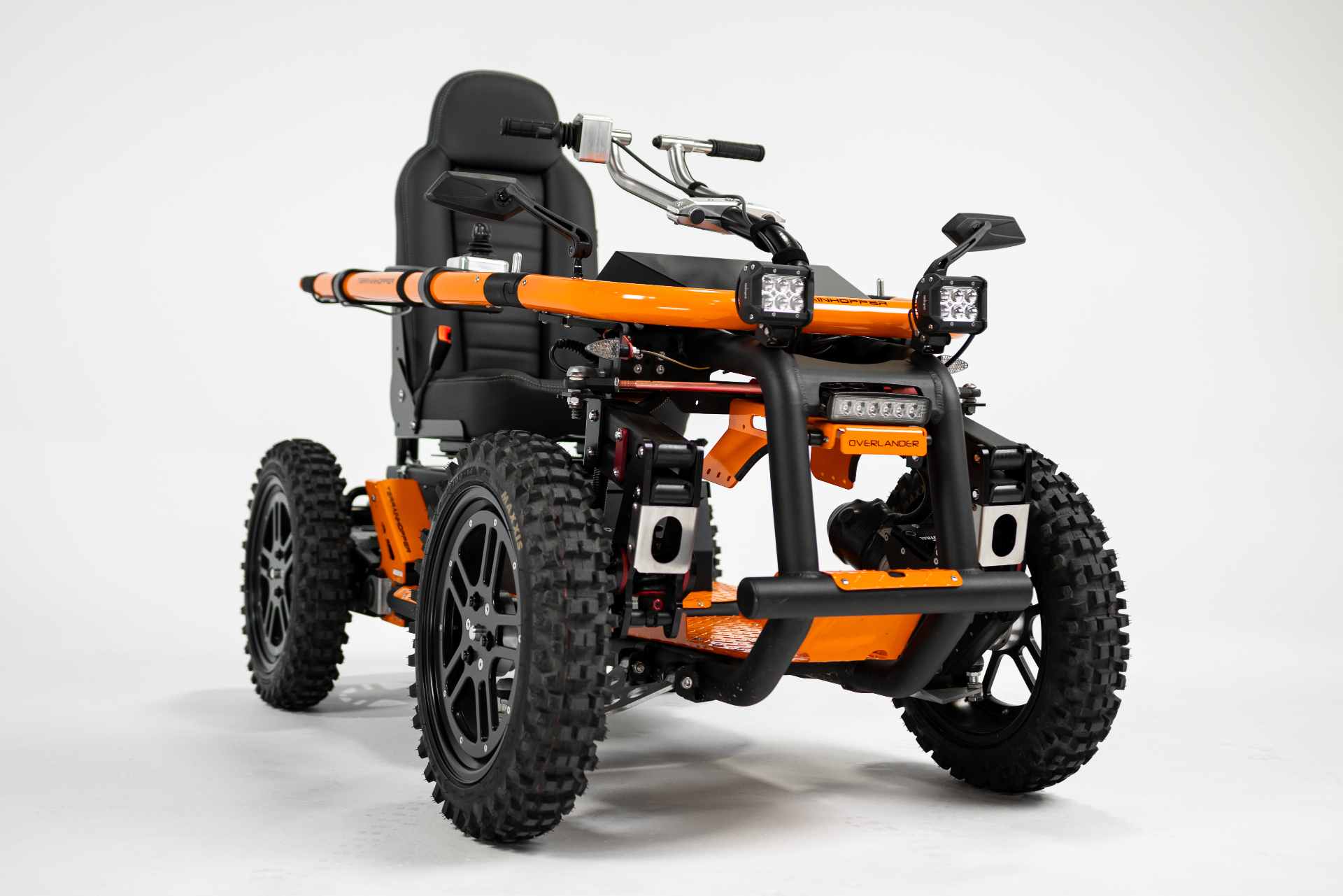
 See the Machine
Past the driveway. Back to real ground.
Stroke rehab gets you walking the loop. The TerrainHopper gets you back to the lease, the river, and the back acres — configured around your post-stroke reality, including one-handed and joystick setups.
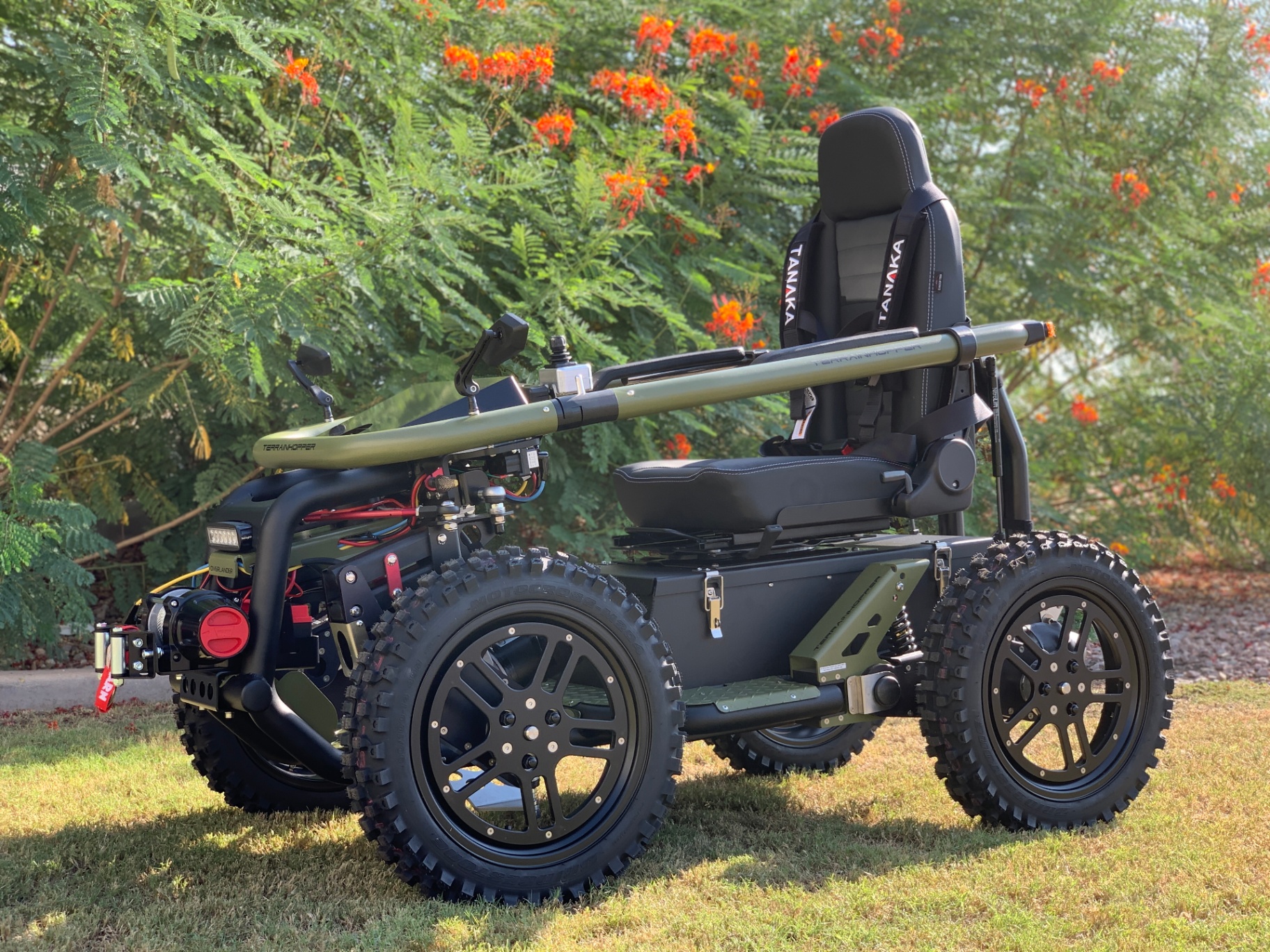
One-handed capable. Outdoor-ready.
Built for soft ground, hills, and the country a stroke survivor used to cover before the rehab loop became the whole world.
One-handed, single-side capable
Joystick configurations and one-handed controls so hemiparesis isn't the thing that keeps you out of the field.
Seated and supported
Stable platform, transfer-friendly seat, harness as needed. The balance fight gets taken off the table.
Real ground, not the driveway
Stroke rehab loops on a flat sidewalk are not what you used to do outside. This machine puts you back on the ground you actually want.
A 10-second self-check.
You or a loved one is a stroke survivor and outdoor mobility has quietly disappeared.
Hemiparesis, fatigue, or balance has closed off the lease, the dock, or the back acres.
You can transfer to a seat with or without help and operate a one-handed throttle or joystick.
You want a tool that's set up around your post-stroke reality, not a generic showroom chair.
People who already have your back.
We're a mobility company, not a rehab team. These are the organizations we point survivors and families toward for support and community.
- American Stroke Association
Education, support, and survivor community resources.
- Stroke Support Group Finder
Find a local stroke support group.
- Different Strokes
Resources and community focused on younger stroke survivors.
Straight answers.
Funding options built to help you ride.
Below are grant organizations that fund adaptive equipment for Stroke riders. For the full picture — state loans, financing, fundraising, sponsorship — see the master Funding page.
- Challenged Athletes Foundation
Grants for adaptive sports equipment and training to individuals with physical challenges, empowering active lifestyles.
- IM ABLE Foundation
Funds adaptive sports programs and equipment for individuals with disabilities — fostering inclusion through recreation.
- Move United
Connects people with disabilities to adaptive sports opportunities and provides equipment grants nationwide.
- High Fives Foundation
Supports athletes who have sustained life-changing injuries during outdoor sports — rehab, adaptive equipment, and mentorship.
- Wheels for Wheels Foundation
Funding for adaptive mobility equipment to help individuals regain freedom and access to everyday activities.
- Team PossAbilities
Funds adaptive sports equipment and recreational opportunities that promote active, independent lifestyles.
When you're ready, explore every funding path
Cobble it together.
There's no single program that hands a TerrainHopper to a rider. The families that get one build a personal funding campaign — a grant here, a state loan there, a fundraiser, a sponsor, a chunk of savings. It works. It just takes a plan.
Talk Through Your Plan- 01
Stack the sources
Almost nobody pays for a TerrainHopper with a single check. The riders who get one usually combine a grant, a state loan, a fundraiser, and a family contribution. Plan for three to five sources, not one.
- 02
Start with what's closest
Apply to a state assistive-tech loan and one or two grants first — those have the longest timelines. Then open a fundraiser to close the gap once you know the number.
- 03
Tell one honest story
A short video, a few photos, and the specific outdoor thing you want back. People don't fund a wheelchair — they fund a grandfather back in the deer woods, a mom back at the lake, a kid back on the trail.
- 04
Ask the rooms you're already in
Church, hunting club, VFW, neighborhood, employer, Ducks Unlimited or NWTF chapter, your kids' school. Local money moves faster than national grants.
What worked for you?
We sell machines. You and your family have actually lived Stroke — the appointments, the denials, the grant forms, the fundraiser that finally broke open, the local club that wrote the check nobody saw coming. That's knowledge we don't have and can't fake.
If you've put together funding for adaptive equipment — yours, a loved one's, anybody's — tell us how. We'll fold what you share into the advice we give the next Stroke family that lands on this page.
Share What Worked- · Which grant, loan, or program actually came through for you?
- · Which ones were a dead end — so we can stop sending people there?
- · What did your fundraiser look like? What made it work?
- · Any local source — church, club, employer, foundation — most families miss?
- · What do you wish someone had told you on day one?
We'll listen more than we talk.
The Trailblazers
Scott rides with MS. Thomas rides as a quadriplegic. Read what changed for them.
Come put your hands on it.
Private outdoor evaluations are the fastest way to know whether a one-handed or joystick configuration fits the way your body works after stroke.