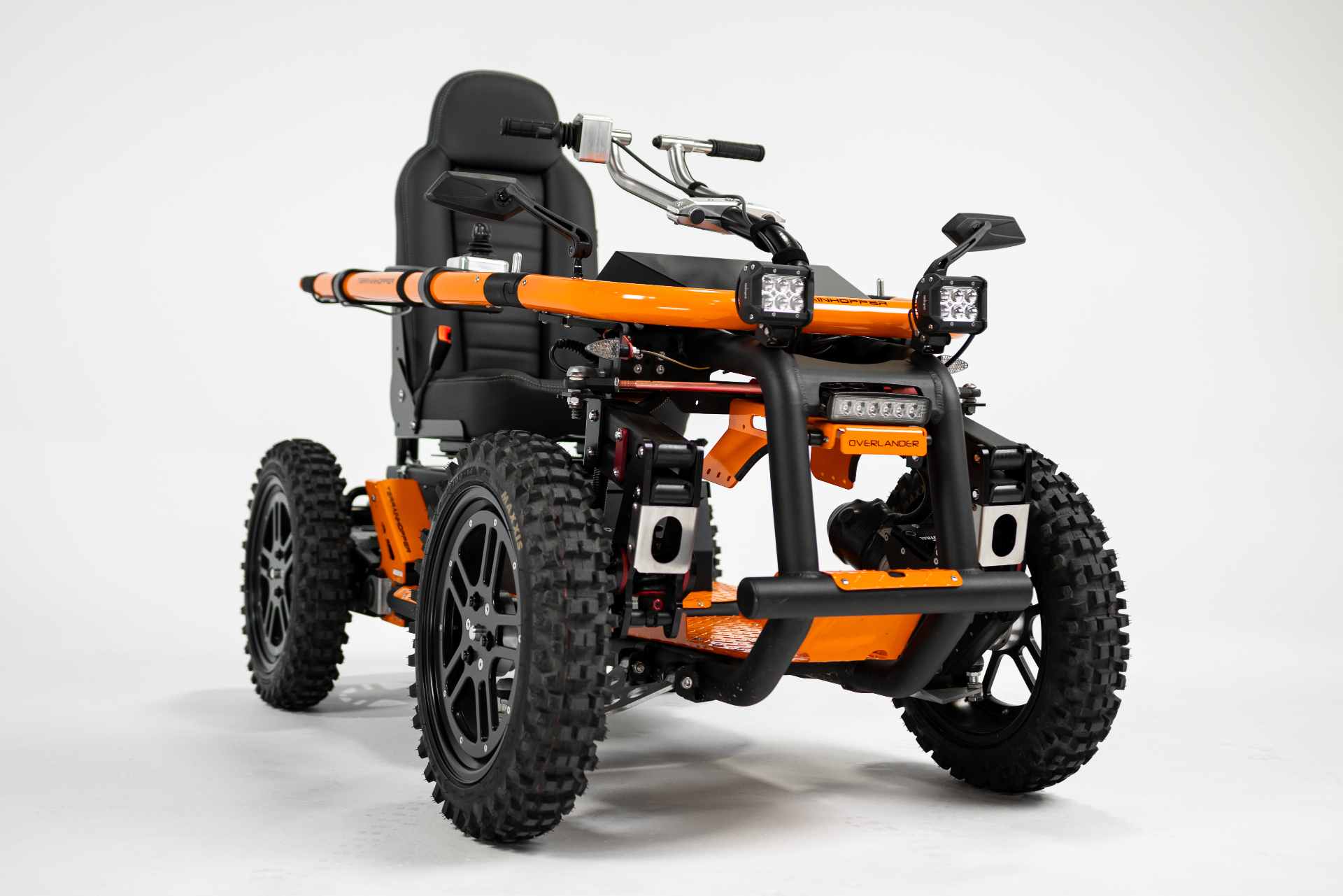
 See the Machine
Get your range back. Skip the three-day price tag.
Whether the amputation came from diabetes, vascular disease, or trauma, the math is the same — every long walk on a prosthetic gets paid back in pain, swelling, and skin. The TerrainHopper takes that math off the table for outdoor days.
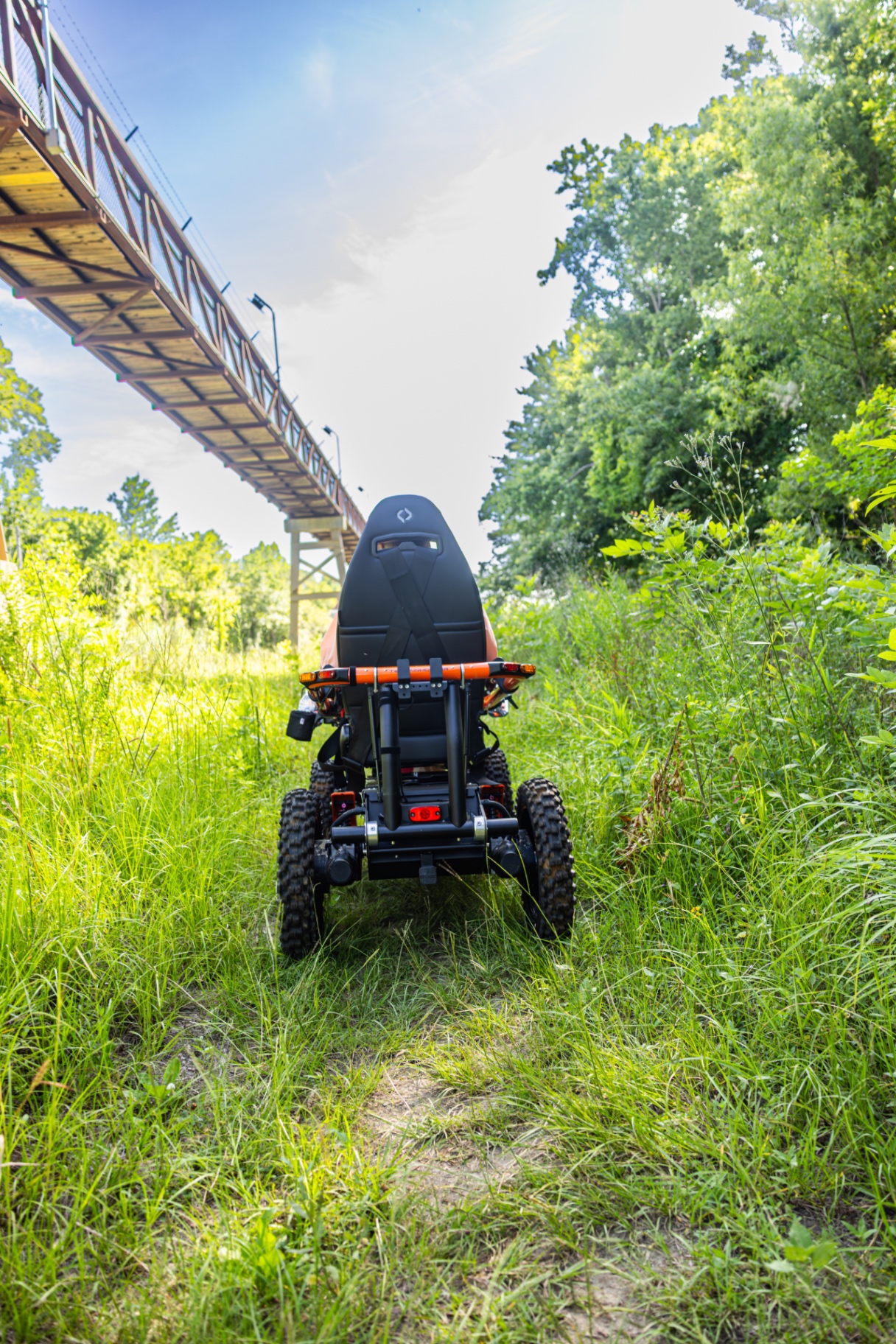
The machine doesn't ask about your leg.
Engineered for soft ground, hills, water, and the kind of terrain that punishes a prosthetic. The same things that make it a great all-terrain machine make it a great answer for a rider whose walking budget is limited.
No prosthetic, no problem
You don't have to be socketed up and prosthetic-on to use it. Transfer in, throttle on, go. The machine doesn't care whether today is a leg day or a wheelchair day.
Built for soft ground
Sand, mud, wet grass, river bank — the exact ground a prosthetic is least happy on is the exact ground this machine is happiest on.
Outdoor time without the cost
Walking the property on a prosthetic burns more calories than a workout. Save the wear, save the skin, save the joint above the amputation. Spend the energy on what you came outside to do.
"After the BKA, I'd rationed my outdoor time down to about an hour at a stretch. First ride on the machine I was out three hours and the only thing sore the next day was my face, from grinning."
— Story placeholder. Real rider testimonials publishing soon.
A 10-second self-check.
If most of these sound like you, the next step is a no-pressure conversation, not a sales pitch.
You've had an amputation related to diabetes, vascular disease, or trauma — and the outdoor parts of your life have quietly gotten smaller.
Walking the property, the dock, the beach, or the lease on a prosthetic is doable, but the cost in pain, swelling, or skin is too high to do often.
You can transfer to a seat with or without help and operate a handlebar throttle or a joystick.
You want your range back — the river, the back acreage, the family camp — without paying for it for three days afterward.
People who already have your back.
We're a mobility company, not a prosthetist or wound-care team. These are the organizations we point riders toward for support, peer connection, and grants.
- Amputee Coalition
Peer support, education, and the National Limb Loss Resource Center.
- Wounded Warrior Project
Programs and adaptive sports for service-connected amputees.
- Challenged Athletes Foundation
Grants for adaptive equipment and outdoor sports.
- American Diabetes Association
Resources for diabetes management and prevention of further complications.
Straight answers.
Funding options built to help you ride.
Below are grant organizations that fund adaptive equipment for Amputation riders. For the full picture — state loans, financing, fundraising, sponsorship — see the master Funding page.
- Challenged Athletes Foundation
Grants for adaptive sports equipment and training to individuals with physical challenges, empowering active lifestyles.
- IM ABLE Foundation
Funds adaptive sports programs and equipment for individuals with disabilities — fostering inclusion through recreation.
- Move United
Connects people with disabilities to adaptive sports opportunities and provides equipment grants nationwide.
- High Fives Foundation
Supports athletes who have sustained life-changing injuries during outdoor sports — rehab, adaptive equipment, and mentorship.
- Wheels for Wheels Foundation
Funding for adaptive mobility equipment to help individuals regain freedom and access to everyday activities.
- Team PossAbilities
Funds adaptive sports equipment and recreational opportunities that promote active, independent lifestyles.
When you're ready, explore every funding path
Cobble it together.
There's no single program that hands a TerrainHopper to a rider. The families that get one build a personal funding campaign — a grant here, a state loan there, a fundraiser, a sponsor, a chunk of savings. It works. It just takes a plan.
Talk Through Your Plan- 01
Stack the sources
Almost nobody pays for a TerrainHopper with a single check. The riders who get one usually combine a grant, a state loan, a fundraiser, and a family contribution. Plan for three to five sources, not one.
- 02
Start with what's closest
Apply to a state assistive-tech loan and one or two grants first — those have the longest timelines. Then open a fundraiser to close the gap once you know the number.
- 03
Tell one honest story
A short video, a few photos, and the specific outdoor thing you want back. People don't fund a wheelchair — they fund a grandfather back in the deer woods, a mom back at the lake, a kid back on the trail.
- 04
Ask the rooms you're already in
Church, hunting club, VFW, neighborhood, employer, Ducks Unlimited or NWTF chapter, your kids' school. Local money moves faster than national grants.
What worked for you?
We sell machines. You and your family have actually lived Amputation — the appointments, the denials, the grant forms, the fundraiser that finally broke open, the local club that wrote the check nobody saw coming. That's knowledge we don't have and can't fake.
If you've put together funding for adaptive equipment — yours, a loved one's, anybody's — tell us how. We'll fold what you share into the advice we give the next Amputation family that lands on this page.
Share What Worked- · Which grant, loan, or program actually came through for you?
- · Which ones were a dead end — so we can stop sending people there?
- · What did your fundraiser look like? What made it work?
- · Any local source — church, club, employer, foundation — most families miss?
- · What do you wish someone had told you on day one?
We'll listen more than we talk.
The Trailblazers
Scott rides with MS. Thomas rides as a quadriplegic. Read what changed for them.
Come put your hands on it.
Private outdoor evaluations are the fastest way to know whether this machine fits your specific level of amputation and the ground you actually want to cover.